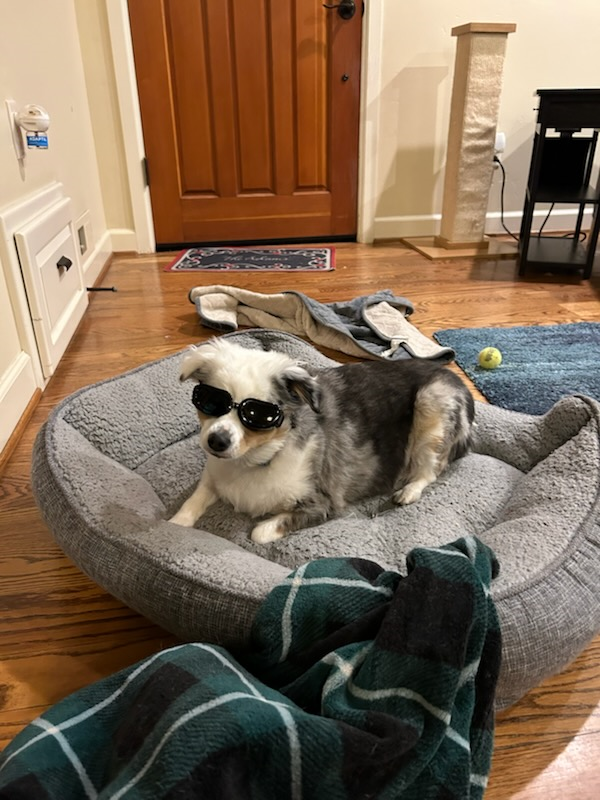
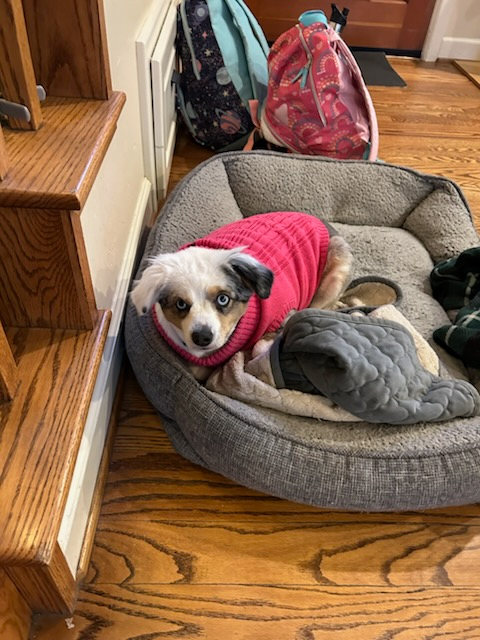
Meet Lucy—a sweet and gentle 4-year-old Mini Australian Shepherd who has been part of our family since she was just a puppy. Lucy’s story is a powerful reminder of how important routine wellness care can be, even for young and seemingly healthy pets.
Lucy first came in for her annual exam and vaccines in November 2023. As part of her visit, her care team recommended annual wellness lab work. At that time, all of Lucy’s results came back completely normal, showing healthy organ function and no cause for concern.
A year later, during Lucy’s next annual visit, her owners once again chose to proceed with routine wellness lab testing. This time, the results told a different story.
Dr. Kuester noticed elevations in Lucy’s kidney values, including BUN, CREA, and SDMA. To determine whether these changes were related to a temporary infection or an underlying condition, a urinalysis was sent out for further evaluation.
The urinalysis results confirmed that Lucy did not have an infection. However, they did reveal protein loss in her urine—an important indicator of kidney dysfunction. Based on these findings, Dr. Kuester recommended an abdominal ultrasound to better understand what was happening internally.
The ultrasound revealed that Lucy has renal dysplasia, a congenital condition that affects kidney development and can lead to kidney failure over time. While the diagnosis was difficult, catching the condition early made all the difference.
Lucy was started on a prescription kidney diet, and a plan was put in place to closely monitor her kidney values every 4–6 months. Her blood pressure was also monitored carefully, as uncontrolled hypertension can accelerate the progression of kidney disease.

Over the past couple of years, Lucy’s kidney values have remained relatively stable. As part of her ongoing management, her care plan has been adjusted to include blood pressure medication, PhosBind to support phosphorus levels, Azodyl, and Telmisartan. With these interventions in place, Lucy continues to do very well, and her quality of life remains excellent.
Lucy’s journey highlights the critical role of annual wellness lab work—even for young pets who appear healthy. Because her owners chose to follow recommended screening guidelines, Lucy’s kidney disease was identified early, allowing for timely intervention and long-term management.
We are incredibly grateful to Lucy’s owners for trusting us with her care and for being proactive advocates for her health. We love you, Lucy, and we look forward to seeing your happy face around the clinic for many, many years to come. 🐾💙